SIGENERGY EVDC V2H charger installation in Roquefort-les-Pins


REGIS ELECTRIC has recently completed a superb SIGENERGY installation in Roquefort-les-Pins, in the Alpes-Maritimes.
This complete home energy system combines:
7 kWp of solar panels;
a 9 kWh SIGENERGY SigenStor battery;
a 12 kW SIGENERGY EVDC bidirectional charger;
V2H and V2X capabilities, subject to vehicle compatibility.
This is far more than a conventional electric vehicle charger. The installation brings solar production, energy storage, EV charging and bidirectional charging together within one intelligent energy ecosystem.
This first SIGENERGY EVDC commissioned by our team marks an important new step in the energy independence solutions we offer to homeowners across the French Riviera.
Are you considering a similar project? Discover our V2H and V2X bidirectional charger installation service in the Alpes-Maritimes.
A complete home energy installation in Roquefort-les-Pins
The aim of this project was to create a coherent, efficient and future-ready home energy system.
The 7 kWp solar array generates a significant proportion of the electricity used by the property.
The 9 kWh SigenStor battery stores surplus solar energy so that it can be used later in the evening, during the night or whenever solar production is insufficient.
The 12 kW SIGENERGY EVDC provides direct-current charging for the electric vehicle and prepares the installation for bidirectional V2H and V2X operation.
The main advantage of this architecture is that the solar panels, home battery and electric vehicle are no longer managed as separate systems. They work together to maximise self-consumption and reduce the home’s dependence on the electricity grid.
How is the SIGENERGY EVDC different from a conventional EV charger?
A conventional EV charger mainly transfers electricity from the home to the vehicle’s battery.
The SIGENERGY EVDC goes much further.
As part of the SigenStor ecosystem, it provides DC charging and can also manage the flow of energy in the opposite direction when connected to a compatible vehicle.
The electric car is therefore no longer simply an additional appliance that needs to be charged. Its battery can become a mobile energy reserve capable of contributing to the home’s electricity supply.
This is the principle behind bidirectional charging: making intelligent use of a high-capacity battery that may remain parked at the property for several hours each day.
What is V2H?
V2H, or Vehicle-to-Home, is a technology that allows a compatible electric vehicle to send some of the energy stored in its battery back to the home.
Electricity can therefore flow in both directions:
from the solar installation or the grid to the vehicle;
from the vehicle’s battery back to the house.
V2H can help cover evening electricity consumption, improve solar self-consumption and reduce the amount of energy purchased from the grid during certain periods.
Depending on the electrical architecture, it may also contribute to a home backup solution. However, supplying the property during a power cut requires compatible equipment, an appropriate disconnection device and a properly designed backup system.
A technical assessment is therefore essential before confirming which functions will be available.
What is the difference between V2H, V2G and V2X?
These three terms describe different uses of bidirectional EV charging:
V2H — Vehicle-to-Home: energy stored in the vehicle is used to power the home;
V2G — Vehicle-to-Grid: the vehicle can exchange energy with the public electricity grid where technical and regulatory conditions allow it;
V2X — Vehicle-to-Everything: the general term covering energy exchanges between the vehicle, a home, a building or the grid.
For homeowners, V2H is one of the most practical applications. It places the electric vehicle at the heart of the property’s solar self-consumption strategy.
The availability of these functions always depends on the vehicle model, its year, software version, local market and applicable regulations.
How do the solar panels, SigenStor battery and EVDC work together?
During the day, the 7 kWp solar installation generates electricity.
This energy is first used to power the appliances operating inside the home. Any surplus can then be directed towards the 9 kWh SigenStor battery or the electric vehicle, depending on the system settings, battery charge levels and household requirements.
When solar production decreases, the energy stored in the home battery can be released to supply the property.
With V2H enabled and a compatible vehicle connected, the vehicle’s battery can provide an additional source of stored energy.
The system can therefore coordinate several energy flows:
Solar panels → home → SigenStor battery → electric vehicle → home
This intelligent energy management can:
increase the proportion of solar electricity used within the property;
charge the vehicle with locally generated energy;
store solar production for the evening or night;
reduce dependence on the electricity grid;
contribute to a suitable home backup solution;
provide centralised monitoring of production, storage and consumption.
A carefully designed and beautifully finished installation
Premium equipment deserves an equally high-quality installation.
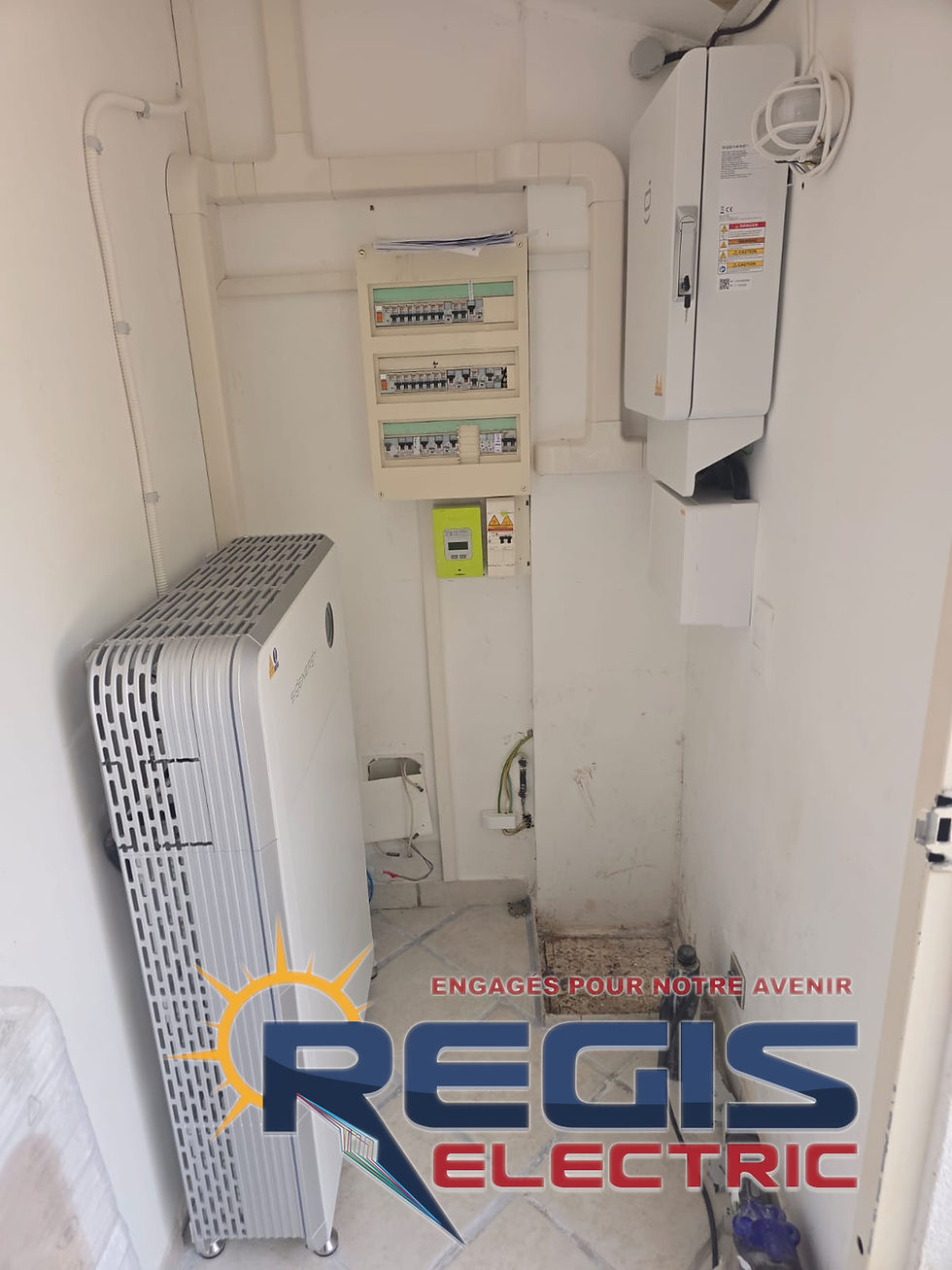
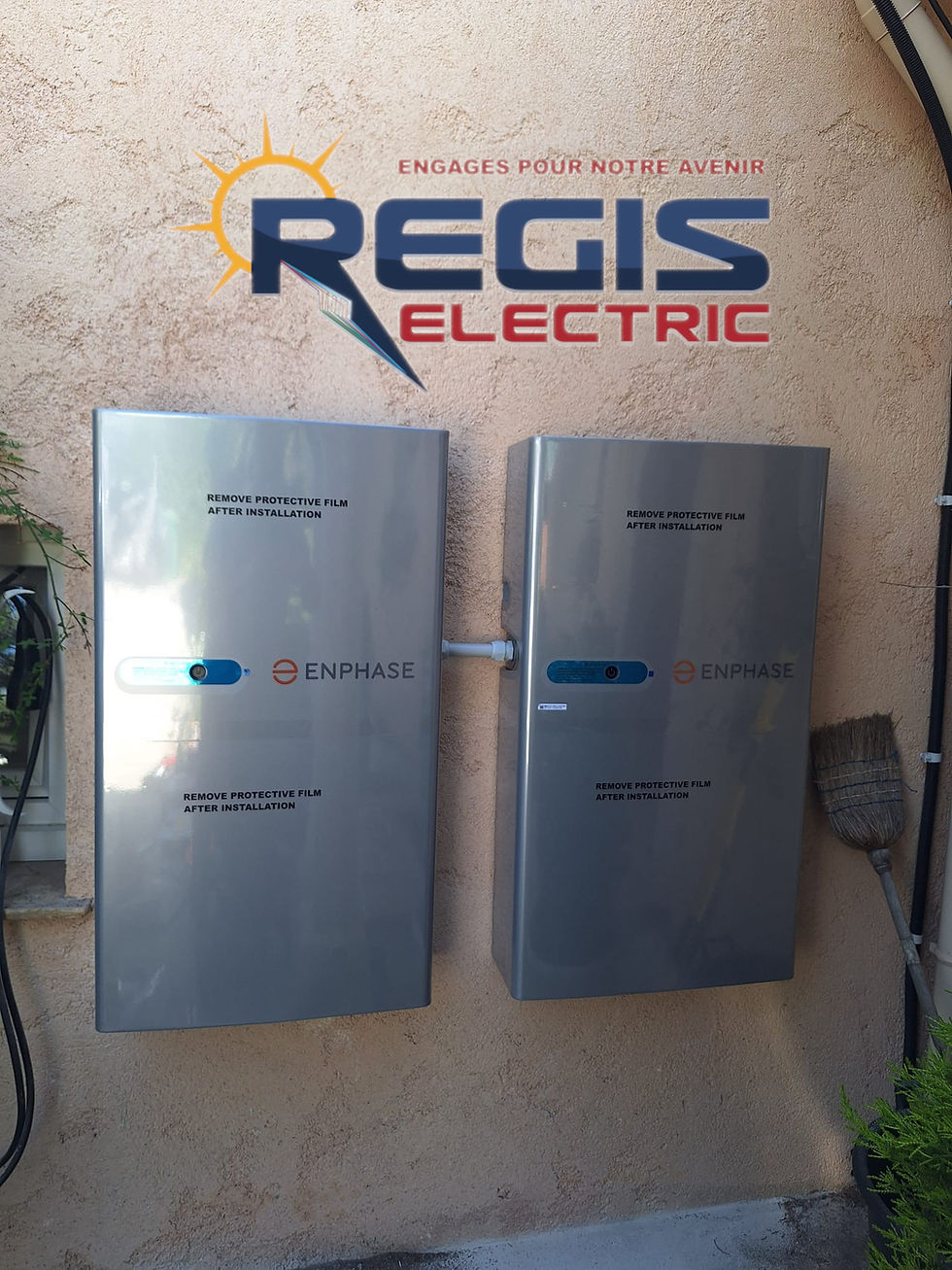
For this project in Roquefort-les-Pins, we paid particular attention to the alignment and levelling of the equipment, the mounting system, cable routing, connector storage and the integration of the installation against the existing stone wall.
The SigenStor, EVDC and electrical protection equipment form a compact, clean and accessible installation.
The result is both technical and aesthetic. The equipment fits naturally into the property, remains accessible for future maintenance and provides the customer with a straightforward energy management solution.
Our customer is delighted with the result — and so are we.
Which electric vehicles are compatible with SIGENERGY V2H?
V2H compatibility does not depend on the charger alone.
The vehicle must also support bidirectional charging and use a compatible protocol and software version.
Before every V2H project, REGIS ELECTRIC checks:
the exact make and model of the vehicle;
its year and specific version;
the connector type;
whether bidirectional charging has been enabled;
compatibility with the SIGENERGY EVDC;
the energy requirements of the property;
the expected operating and backup functions.
The list of compatible vehicles is regularly updated. It must therefore be checked at the time of the technical assessment using the official SIGENERGY V2X vehicle compatibility page.
A general “V2H ready” statement should never replace a proper vehicle and installation compatibility check.
Your V2H installer in Roquefort-les-Pins and the Alpes-Maritimes
Based in Valbonne, only a short distance from Roquefort-les-Pins, REGIS ELECTRIC helps homeowners combine solar panels, battery storage and bidirectional EV charging.
We install these solutions throughout the Alpes-Maritimes, including:
Roquefort-les-Pins, Valbonne, Cannes, Mougins, Antibes, Biot, Mouans-Sartoux, Grasse, Le Cannet, Mandelieu-la-Napoule, Cagnes-sur-Mer and Nice.
Our RGE QualiPV and IRVE Recharge+ qualifications allow us to manage the entire project:
solar production assessment;
battery storage sizing;
evaluation of the available electrical capacity;
vehicle and V2H compatibility checks;
installation of the bidirectional EV charger;
electrical protection and distribution work;
backup system assessment;
configuration of the SIGENERGY ecosystem;
customer guidance and system commissioning.
This dual expertise in solar energy and electric vehicle charging is essential.
A bidirectional charger should not be considered as an isolated appliance. It must form part of an energy strategy adapted to the property, the vehicle and the occupants’ daily requirements.
Would you like to install a V2H charger on the French Riviera?
Do you own a compatible electric vehicle, or would you like to prepare your home for bidirectional charging?
REGIS ELECTRIC can assess the complete feasibility of your project, including the vehicle, available electrical capacity, solar production, battery storage, backup requirements and the existing electrical distribution board.
Our objective is not simply to install an EV charger. We design a safe, coherent and future-ready energy system that helps you make better use of your solar production and stored electricity.
Request your personalised V2H assessment:
telephone: 07 82 18 92 43;
email: office@regiselectric.fr;
Frequently asked questions about V2H chargers
Can a V2H charger power the entire house?
This depends on the available power, the vehicle’s battery capacity and the appliances that need to be supplied. A technical assessment determines whether the entire property or only selected priority circuits should be included.
Is the SIGENERGY EVDC compatible with every electric vehicle?
No. The vehicle must support bidirectional charging and be compatible with the equipment, protocol and software version being used. Compatibility is checked individually before any installation is proposed.
Do I need solar panels to install an EVDC?
Combining the EVDC with solar panels offers significant advantages. It allows the vehicle to be charged with electricity generated at home and helps maximise solar self-consumption. The exact SIGENERGY configuration must be determined during the technical assessment.
Why install a home battery if the car already has a large battery?
The home battery remains available when the vehicle is away from the property. It can store daily solar surplus and cover regular household consumption independently of the vehicle. The two batteries are therefore complementary.
Can the vehicle power the home during a grid outage?
This is possible only if the vehicle, EVDC, energy gateway and electrical installation are compatible with backup operation. A suitable grid disconnection and backup system must also be installed. A bidirectional charger alone does not guarantee power during an outage.
Who can install a V2H charger in Roquefort-les-Pins?
A V2H system should be installed by a company with expertise in EV charging, solar energy, battery storage and electrical protection.
REGIS ELECTRIC is an IRVE Recharge+ and RGE QualiPV qualified installer based in Valbonne. We design and install V2H solutions in Roquefort-les-Pins and throughout the Alpes-Maritimes.
How much does a SIGENERGY V2H installation cost?
The cost depends on the existing electrical installation, vehicle compatibility, required charging power, solar panels, battery storage, backup equipment and any necessary electrical work.
A site survey allows us to provide an accurate proposal adapted to the property and its energy requirements.

Comments